


Giulia (Type 105) 1962-1993
Tom Taylor
1962
White
3299

Specification

Specification:
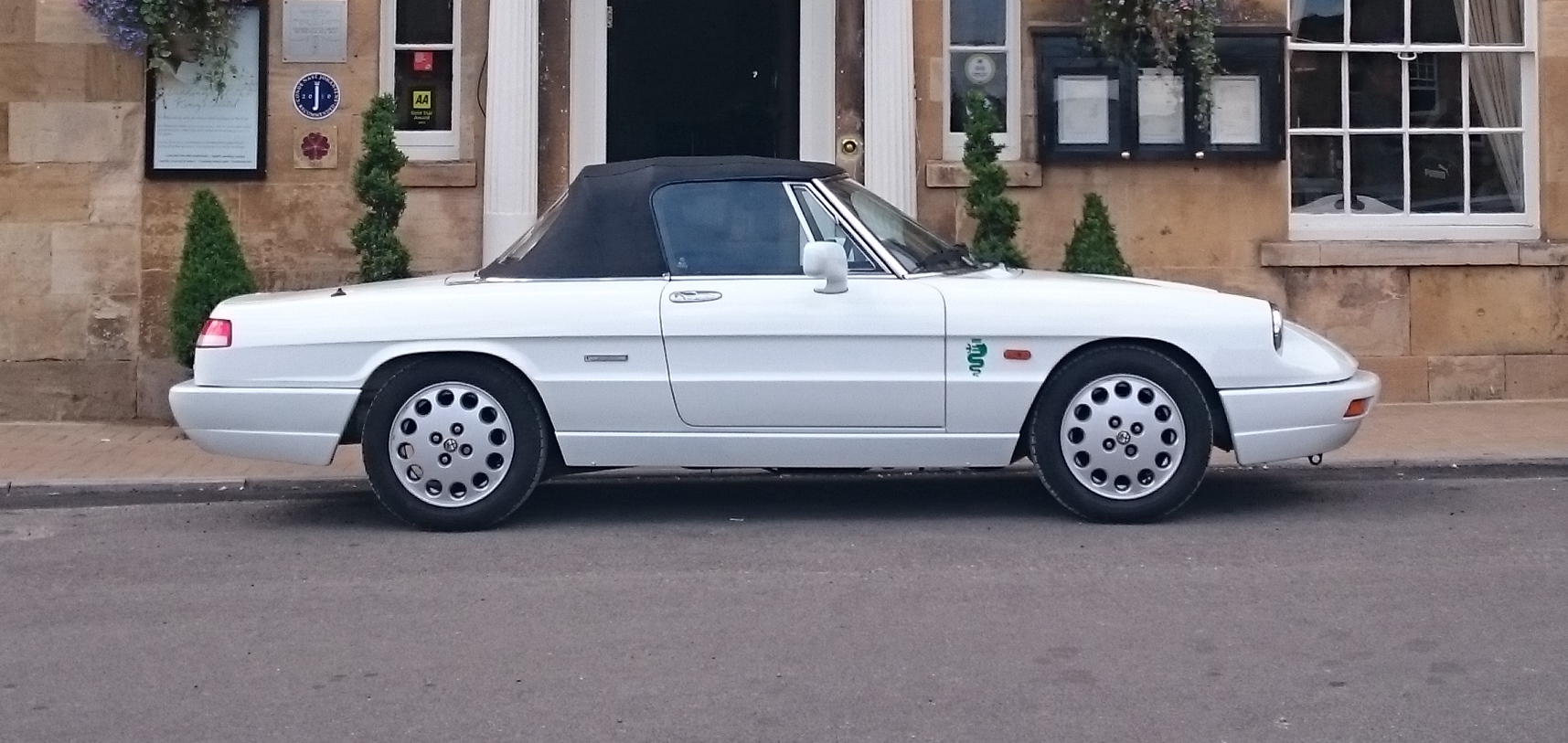
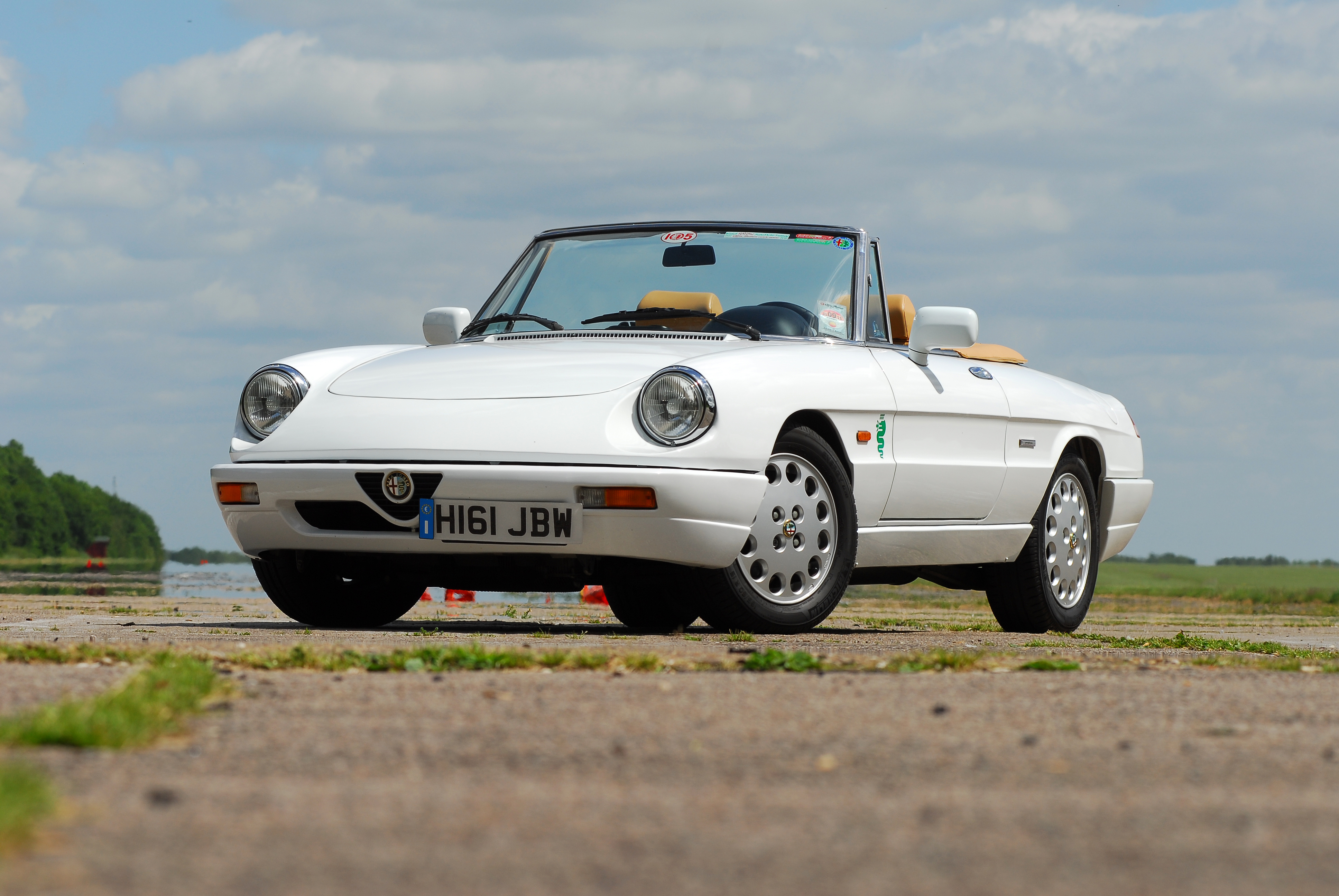
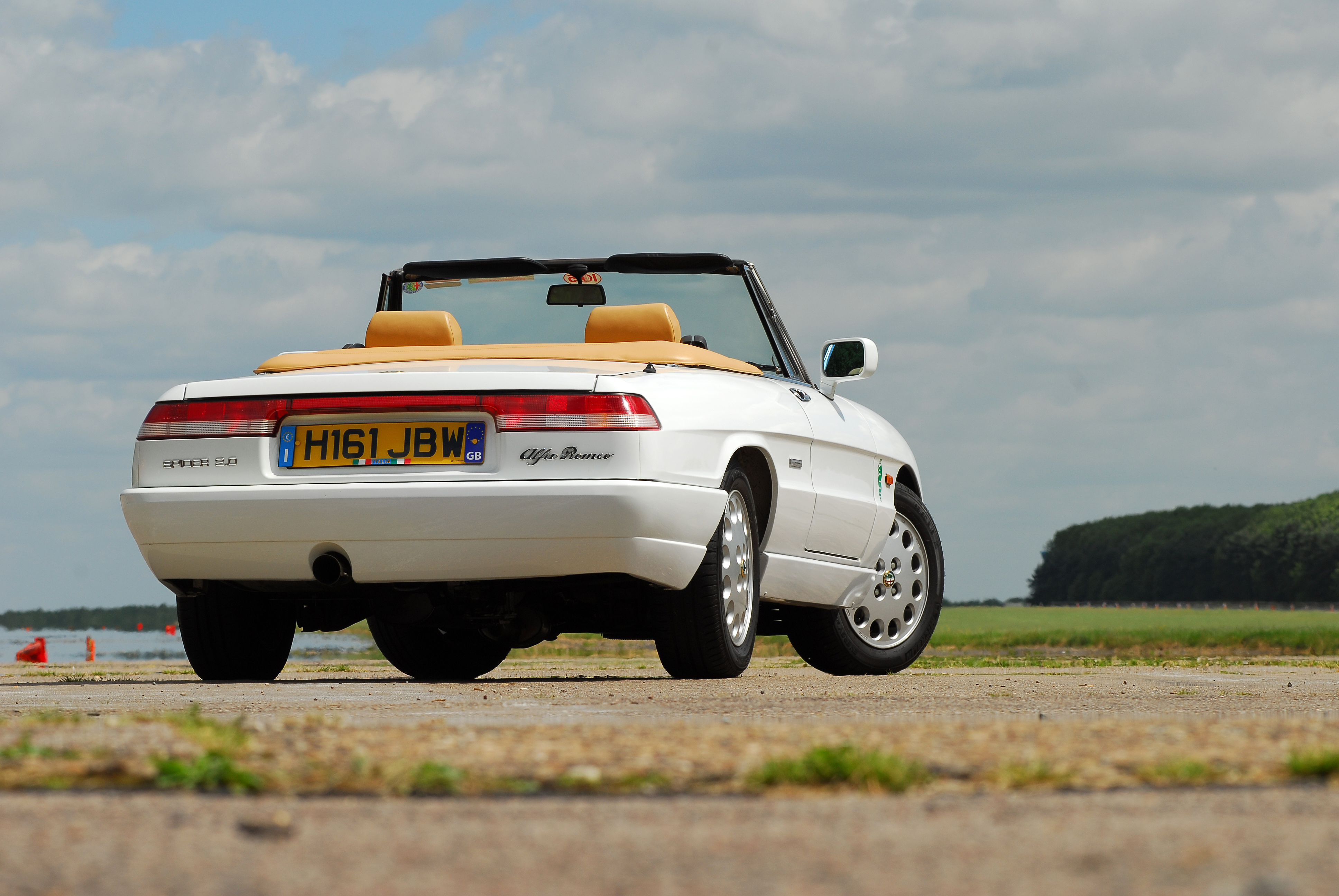
The S4 Spider, as it became known, was launched in 1990 being the fourth edition in the evolution of the Giulia Spider from the introduction of the S1 ‘Duetto’ in 1966.
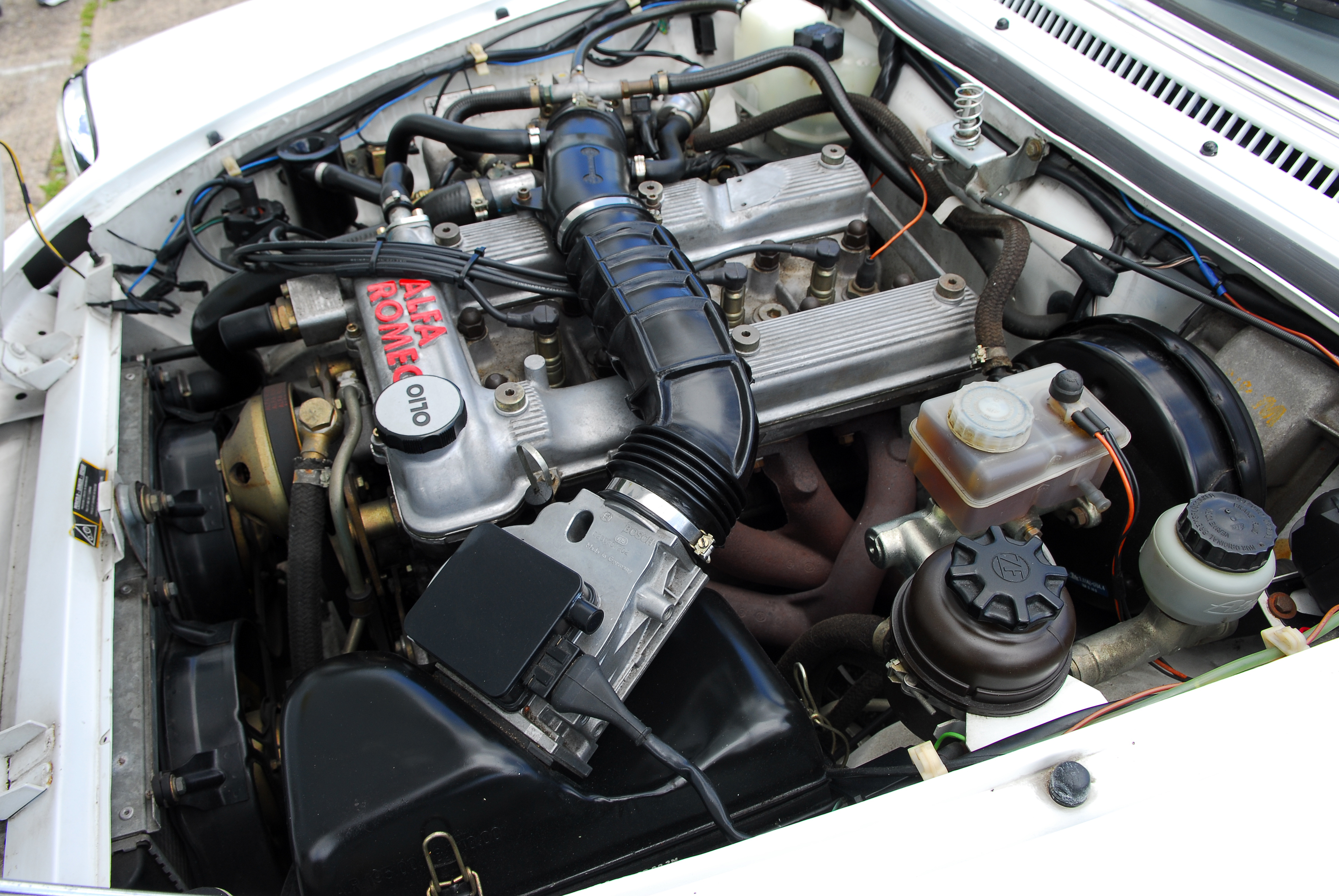
The engine is a 4 cylinder Twin Cam, 2.0 litre (1962cc) with Bosch Motronic fuel injection and electronic ignition, which was, at the time, a new innovation for the Spider. It develops 120bhp with the catalyst as fitted to UK cars. Non-cat cars developed 126bhp. It also has variable inlet valve timing. The 0-62 time was quoted as 9.4 second (9 seconds for the non-cat) with a top speed of 119mph.
5 speed gearbox, rear wheel drive with a limited slip differential.
The UK S4 came with; PAS, leather steering wheel, electric windows and door mirrors, alloy wheels and a colour coded hard-top.
It was available in white, red, black, silver and metallic red with tan vinyl (Texalfa as it was called!) and alcantara seats. Leather seats were an optional extra and it is rather annoying when you see ads proclaiming that the car for sale has leather seats when they are clearly vinyl! Leather is quite rare on an S4. Believe it or not, a radio/cassette was an optional extra, although, in reality, most UK cars were supplied with one at the dealer. Mine was fitted with a Clarion for the sum of £143,48!
My car was bought by the first owner for £16,145 with a £1,270 discount so I’m presuming the list price was around £17,400.
History
The S4 was launched in 1990 and was available in the UK for the first time since the 1970s when the S2 version was in production The S3 was never officially available in the UK through authorised Alfa Dealers but some garages were importing from, typically, France and Belgium and converting to RHD. The most well-known was a dealer called Bell & Colvill.
Although the S4 was officially for sale in the UK, it was not converted to RHD in the factory so was only available in LHD form in the showroom. However, it was possible to request a RHD version and Alfa UK would duly oblige by converting at a company called Seaking, These cars came with a plaque in the door-shut and were still covered by the manufacturer warranty as they were official conversions. I seem to recall that this conversion came at an additional cost of circa £2,500.
Mine is a 1991 model. I original bought the car in 2005 from the previous owner who had owned it from new and is LHD. The first owner was perfectly happy with LHD as the family had a cottage in France and made frequent trips over there.
I kept the S4 for 12 years, selling in 2017. I then bought it back from the owner I sold it to in 2022 and it came back in exactly the same condition with just an additional 1,500 miles on the clock.
The S4 has a varied service history with the first owner having it serviced at dealers at the required intervals. When I first took ownership I serviced it myself each year and carried out other essential maintenance such as brake pads, shock absorbers etc as it is a relatively easy car to work on. I also used Roger Evans at Peak Alfa for tasks that I did not want to take on. The owner I sold it to had it serviced at Alfaworkshop each year even though the mileage was low. Now I have it back I will continue to carry out general servicing myself as I do enjoy working on it. Since coming back it’s had a new radiator temperature sensor, a thermostat and a throttle position sensor (to solve erratic idling).
The biggest issue I once had was a non-starter, I had tried everything to trace the fault, including all ignition and fuel checks with no luck. It was suggested by an S4 expert on an Alfa forum that the relay which operates the ECU could be at fault. This relay is unusual in that it contains a diode to prevent unwanted electrical feedback into the ECU which can cause damage.
Fortunately a long standing Alfa dealer in the UK had two relays in stock and I took both! I put a new relay in and it fired up first time! As it turned out, after opening up the faulty relay, a hair thin wire to the coil had broken. The OEM Bosch relay is no longer in production and is now virtually impossible to find, however, I have also found that a relay fitted to a Land Rover, part number AFU2913L is the same type of relay.
Since owing the S4, apart from usual maintenance and replacement of ‘service’ parts, I have carried out the following:
New Koni Shocks all round
New, improved, rear springs for a better ride
Replaced prop-shaft centre bearing with a heavy-duty version
Momo leather/wood steering wheel
Momo wooden gear knob
Alfa branded tan mats
Upgraded Sony sound system with rear speakers
Wind stop/deflector
Custom made stainless steel exhaust system
Emergency bonnet and boot release system
Cat legally removed to release the extra 6 horses!
All the bodywork is original and it has had no new paint. As is the interior and the seats in particular are original with none of the usual wear to the alcantara. It has been garaged from new and is only used in the summer months. The alloys have no marks at all and the engine bay is also very presentable. It even still has its original hood which is in excellent condition as is the colour coded hardtop which I have never used, except when picking up the car from the previous owner!
My wife and I have driven to the Italian lakes and Tuscany 4 times with smooth and incident free journeys. On one trip we returned 39mpg which is astonishing as I wasn’t particularly taking it easy!
The only thing I would say is that these trips were in Spring time as the temperature is perfect in the S4 with the top down, but I would not fancy it in the height of summer having no air con!
Engine
The engine is a 4 cylinder Twin Cam, 2.0 litre (1962cc) with Bosch Motronic fuel injection and electronic ignition.
Interior
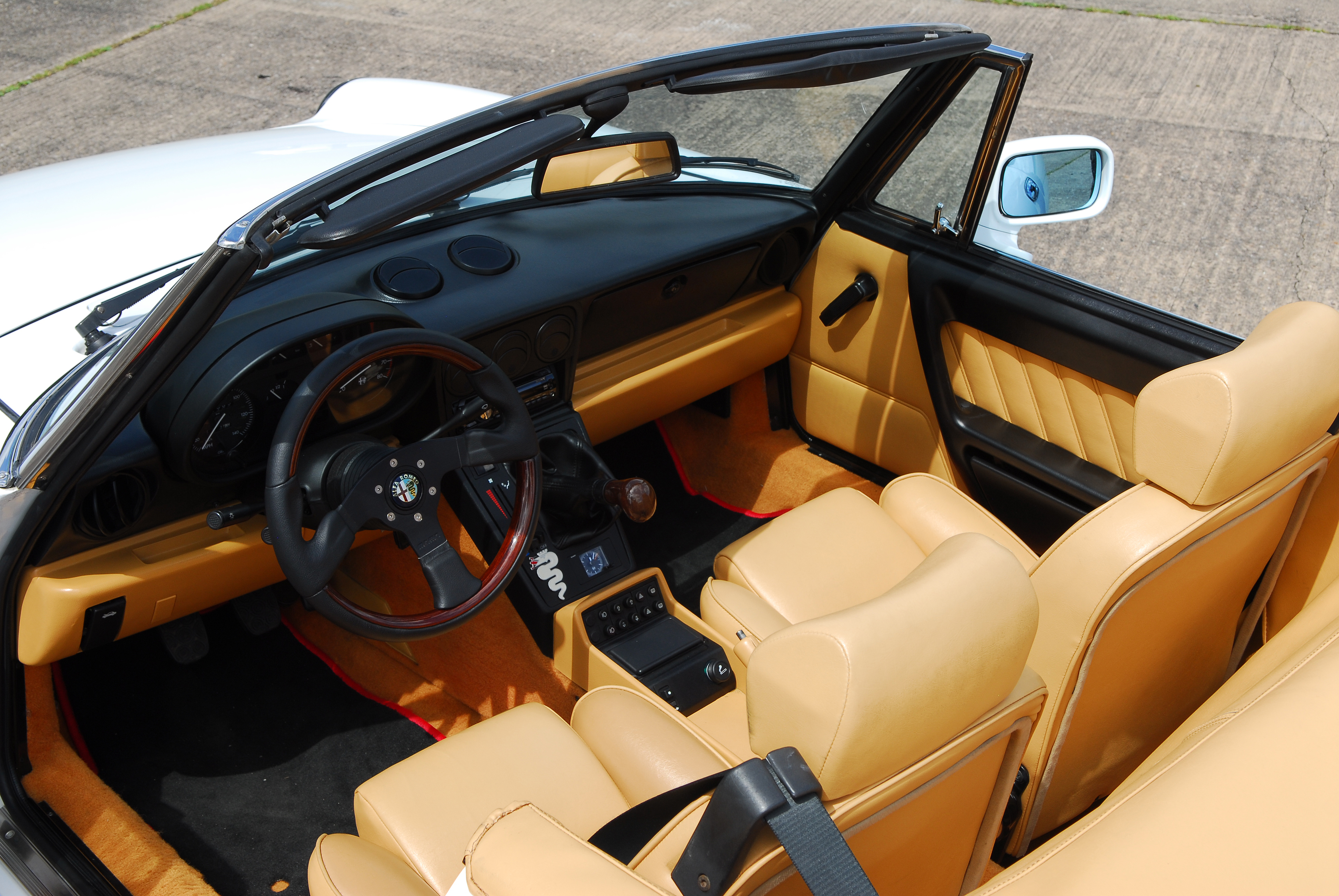
The interior came in tan vinyl (texalfa) on UK models with matching carpets, although black was an option in some counties and these do pop up in the UK. Leather seats were an option in the UK. The steering wheel and gear knob on mine, pictured here, are non-standard.
The ‘B’ pillar internal trim fittings which contain the handles for the fuel filler cap and the boot are quite flimsy and can fall apart as mine did, but replacements are available from ‘Classic Alfa’ or ‘Alfaholics’ and are made from a very sturdy metal covered in vinyl.
Speedometer issue
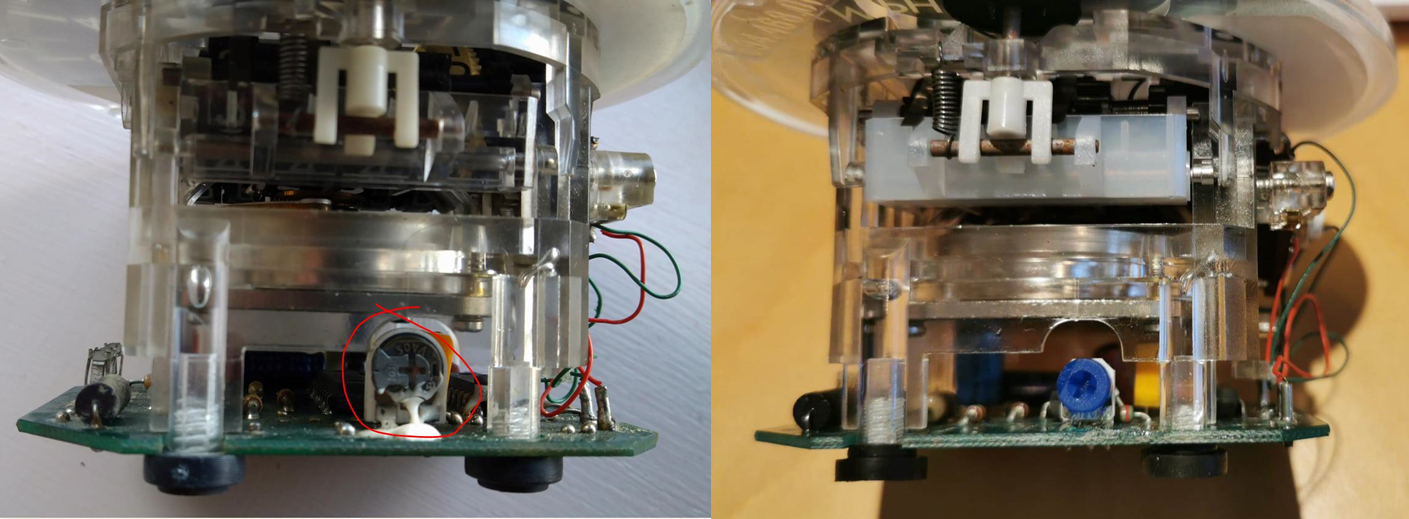
The speedometer in the S4 was one of Alfas early examples of an electronic device. Earlier Spiders had purely cable driven speedos but in the S4 the cable drive from the gearbox feeds into a pulse generator which in turn supplies electronic pulses to the speedo. Inside the speedo is a small adjustable potentiometer which is adjusted to calibrate the electronic feed into the correct movement of the needle to show the correct speed. This is all good when it is working well but with the passage of time and miles the potentiometer has a tendency to fail gradually and the indicated speed becomes erratic, for example, showing an indicated speed much slower than actual!
The solution to this issue is to remove the speedo and fit a new potentiometer. The removal of the speedo is quite easy and the whole instrument panel can be removed in around 10 to 15 minutes and taken to the bench to remove the actual speedo which again is very easy.
There is need to remove the whole monopod from the top of the dash, just carefully lift the front cowling around the pod with a screwdriver or lolly stick and gently prize it outwards, it will unclip from the pod and can be then be removed . There are four small screws holding the instrument panel including the speedo unit into the pod.
Once these are removed, the facia panel can be pulled out to reveal the four large connectors plugged into the back of the unit. These can then be removed by acting on the tabs on the top of each one. Once removed the whole facia can be extracted.
It needs to be wrestled it out carefully over the steering column cowl and to the side of the steering wheel, but it will come out! Mines been out more times that I can remember trying to sort my inaccurate speedo and I can get it out of the car in about 10 minutes!
Once out, it can worked on it indoors. The speedo comes after removing four screws to remove the rear of the unit, then another four holding in the speedo, but great care is required as there are some very delicate bits in there! The speedo can then be lifted out from its housing.
The pot which needs replacing is visible in the above photo on the left. Skill with soldering on a PCB is required and as I don’t have that particular skill I had an electronics expert do it for me. The phot above on the right shows the new pot in situ.
These are the ones I used (they come in packs of 10, however they are very reasonably priced at around £3.50 at the time of writing - 2026):
Once installed the pot needs to be calibrated and this involves a few trips out in the car using the ‘trial and error’ technique!
The speedo needs to be installed back into the casing but there is no need to screw it in, just make sure the small pins in the casing locate into the back of the speedo. The rear of the unit does not need to be put back into the front (the part with the Perspex see through cover). Take the unit with the speedo back into the car and connect the rear plug adjacent to the speedo. A Sat Nav or phone with a speed app is required to monitor the actual speed against the needle.
Take it out for a drive and note the Sat Nav versus the dial. Stop the car and the speedo can be easily taken out of the housing to turn the pot screw to alter the needle movement. I can’t recall which way increases/decreases the speed but driving off will reveal that!
Pop the speedo back in and see the change of needle position. Keep repeating this until it matches the Sat Nav. Mine ended up running 3mph faster than the Sat Nav which was fine as it’s better to be slightly overt than under to preserve my licence.
Once happy, the complete unit can be reassembled and put back into the car.
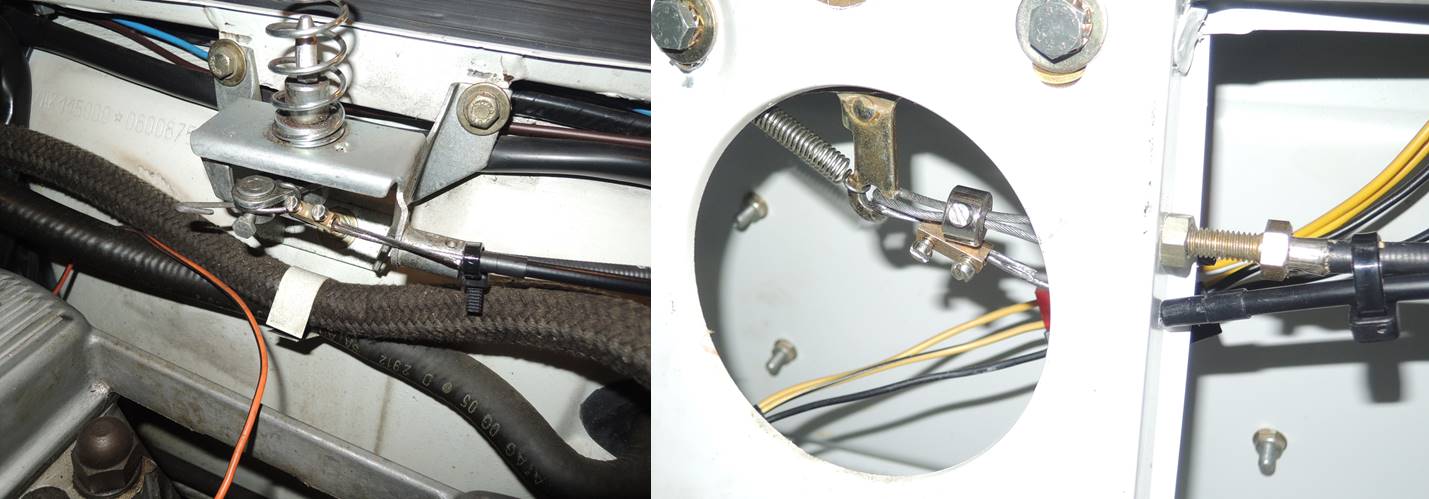
Emergency bonnet and boot releases - attaching to mechanism
It would be a disaster if the bonnet release cable ever snapped and it would be near impossible to open the bonnet! The same could also be said of the boot release,
The solution is to simply run another cable (called a Bowden cable as used on bicycle brakes) alongside both cables. At the mechanism end they can be attached by pulling the inside of the cable out from the outer cable and wrapping it round the part which needs to be pulled to open the bonnet or boot. I clamped the cable together using the metal part of an electrical connector block used for connecting cables together.
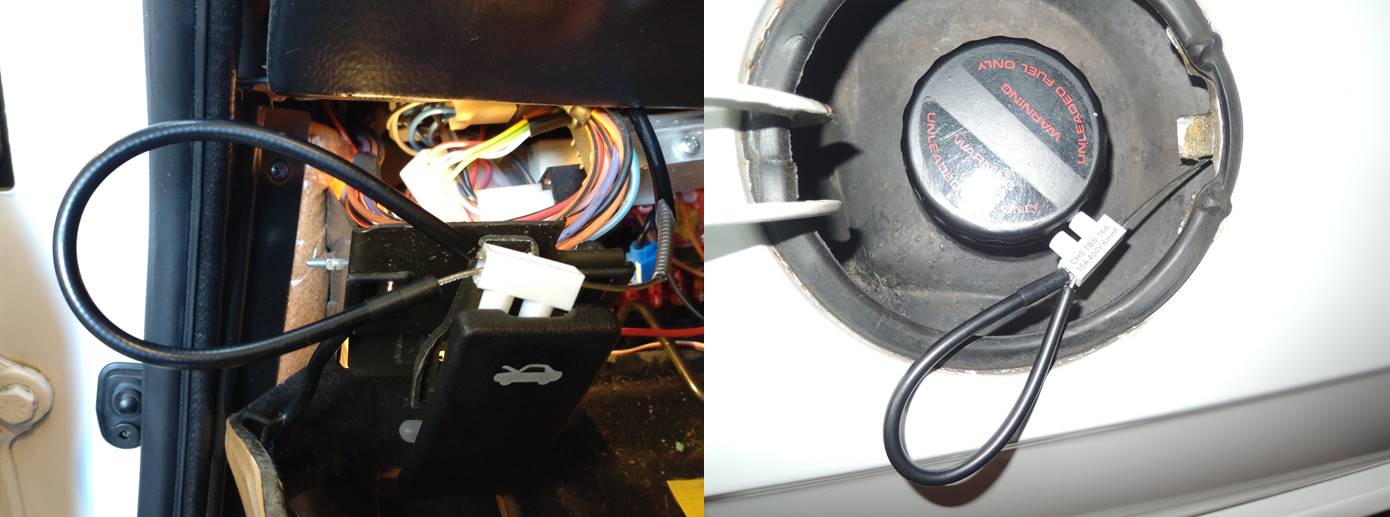
Emergency bonnet and boot releases - pull devices
Route the bonnet cable through the existing cables grommet in the bulkhead and pull it down behind the fuse box. Form a loop in the cable and clamp it together using the same method as the mechanism end. The boot cable can be routed under the boot carpet to appear inside the fuel filler cover.
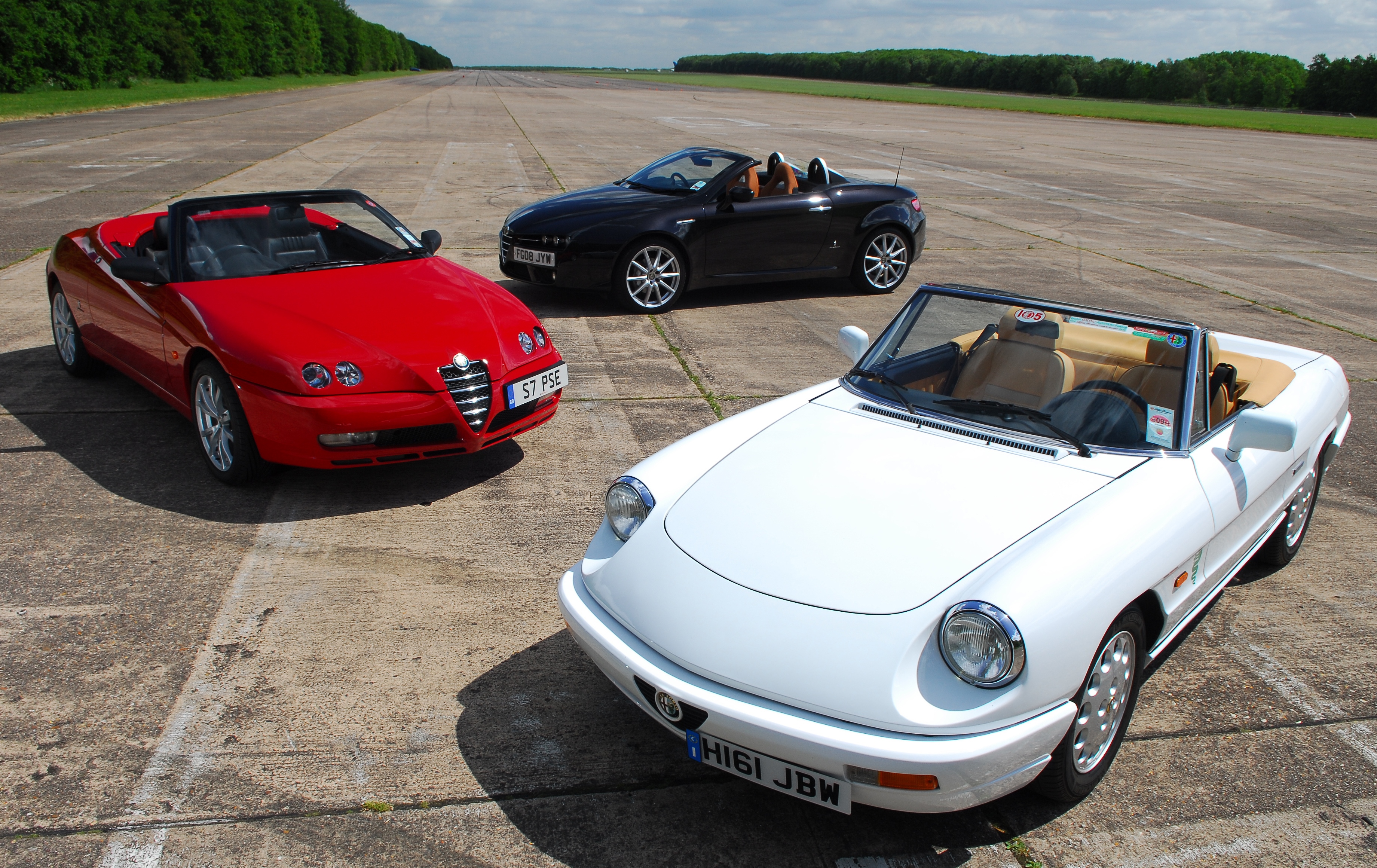
Auto Italia magazine feature
My S4 was chosen to be featured in Auto Italia magazine as part of a test between the 916 and 939 Spiders. This took place at Bruntingthorpe airfield near Lutterworth in Leicestershire.
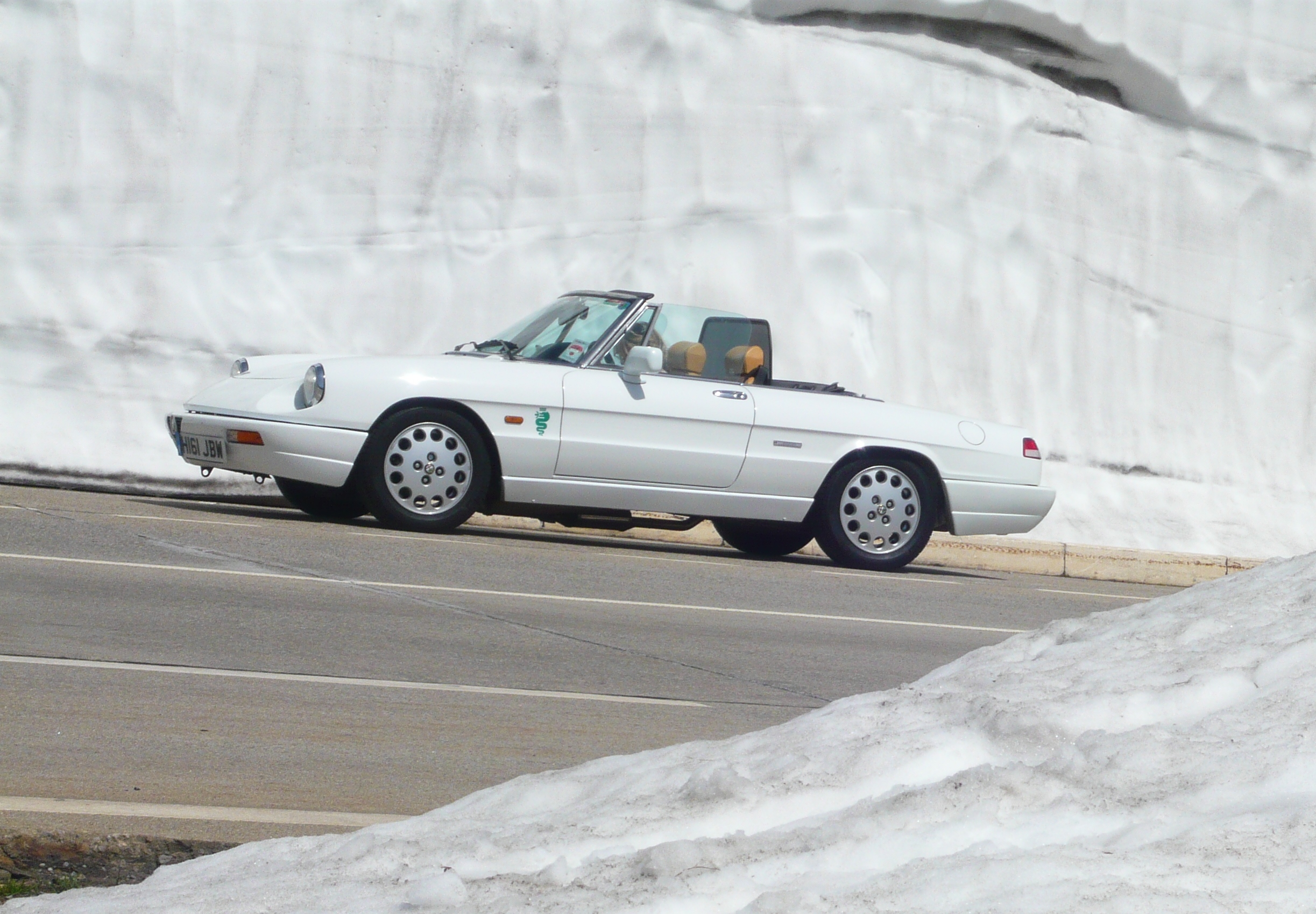
Gotthard Pass
This is my S4 posing in the snow on the Gotthard pass on the way to Italy. Despite the snow the hood was down and it was warm enough for shorts and T shirt!
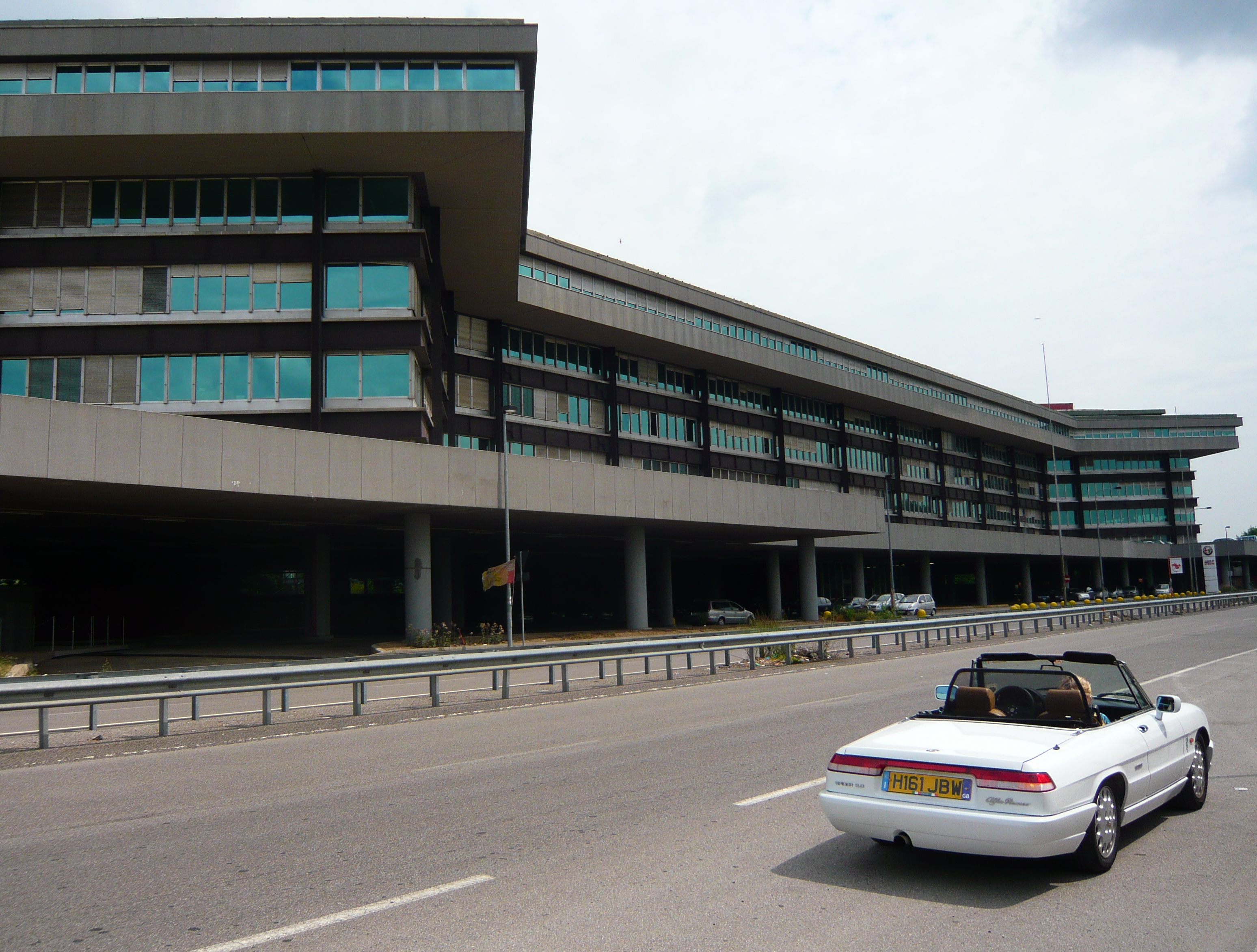
Arese
I know it wasn’t built at Arese, but I understand the engine and chassis probably was before being shipped over to Pininfarina for final assembly, but I could not resist a visit, before it was demolished to make way for a shopping mall.
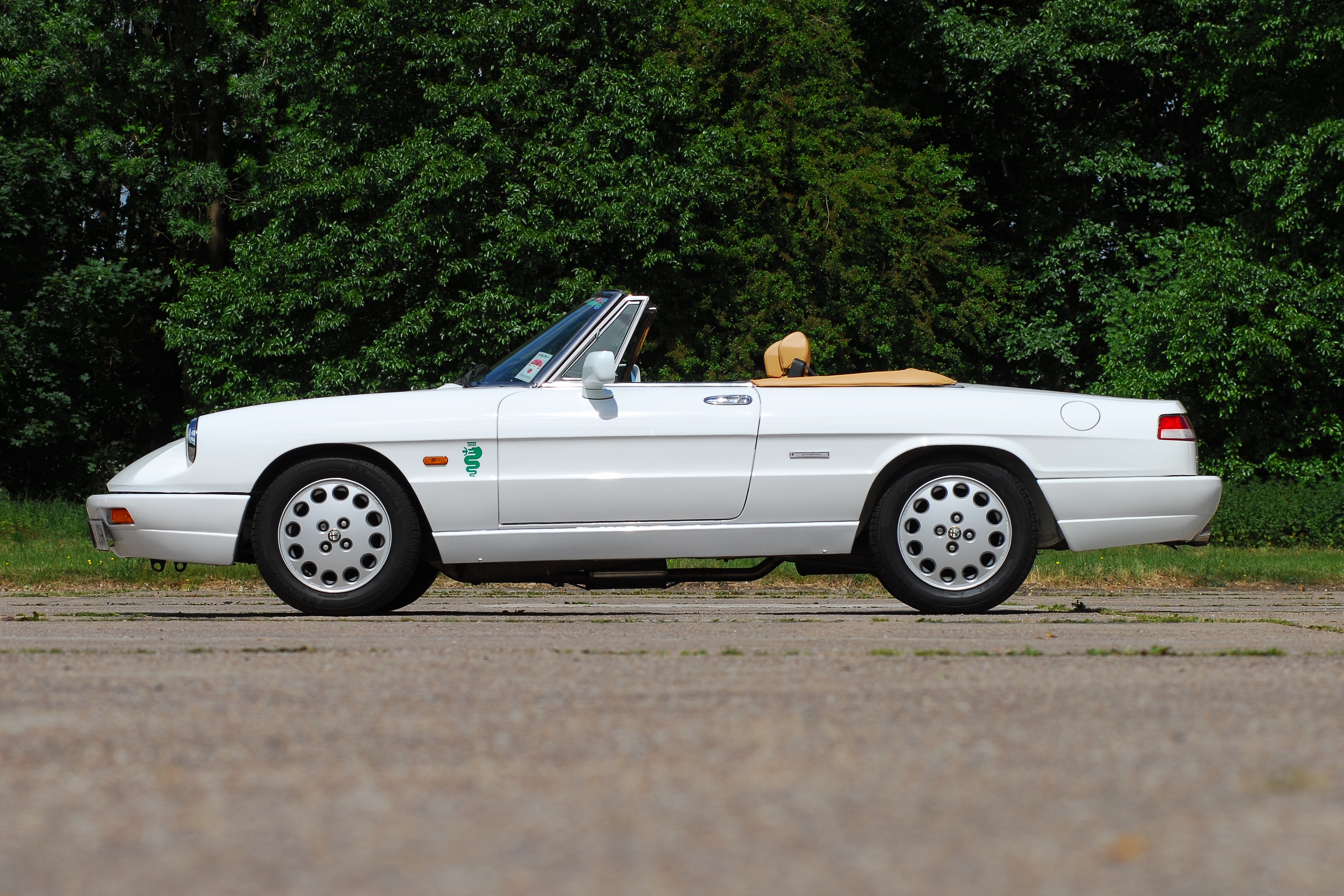
Now for sale......
Unfortunately, the time has come for me to sell my Spider, again! I have other Alfas and an Abarth Spider which are keeping me busy and the S4 is not being used as often at it should. I have priced it at £16,995 which is entirely consistent with the condition and is actually less than the recent valuation provided by the 105 Registrar of the Alfa Romeo Owners Club.
The following will come with the car:
- Hardtop complete with all correct fixings
- Hardtop stand with wheels
- Windstop
- Original steering wheel
- Original ECU Chip (taken out when replaced with 'Squadra' chip)
- Spare ECU relay
- Tonneau cover and rare, rear window cover to protect from scratches when folded
- Original handbook and wallet, service book and comprehensive history file
- Two sets of spare keys
- This 'Guardian' page stays with the car
The current mileage is 56,550.
£16,995.
Call or message Tom on 07711 732844.